
LEGKO / Our working system
Simple parts. Deliberately assembled.
LEGKO is the internal system we use to build and maintain our web projects. This site documents the architecture, publishing workflow and decisions behind that work.
Explore the system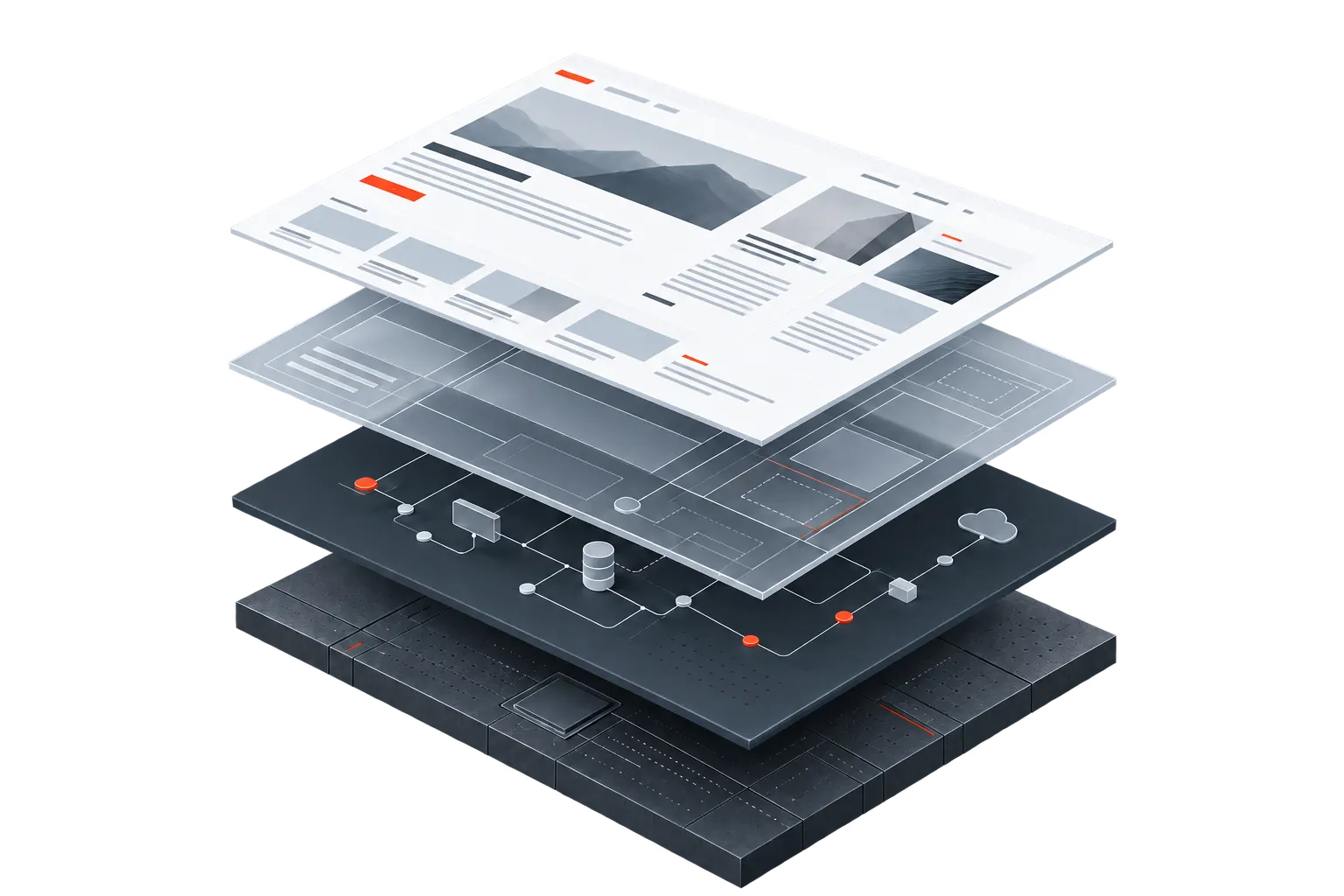
- 01Content
Text, images, pages and manuals
- 02Presentation
Layout, typography and components
- 03Functionality
Forms, routing and integrations
- 04Foundation
Architecture, build, deployment and SEO
Replace · Upgrade · Extend
without starting from scratch.
01 / The system
A shared foundation. A repeatable process.
We combine structured content, reusable components and a reviewed publishing workflow. Each project keeps its own content model, presentation and operating requirements.
- 01
Content & relationships
Define page types, required fields and links between records so changes stay consistent.
- 02
Presentation & components
Render that content through shared components, with layouts and assets suited to the project.
- 03
Technical SEO
Keep URLs, metadata, crawlable links and structured data consistent through shared rules and checks.
- 04
Build & delivery
Review the change in Git, inspect the built pages and publish an approved version.
- Ownership
- Record who controls the domain, accounts, content and code, and who maintains the project.
- Maintenance
- Maintain the dependencies and integrations, document operating decisions and keep a recovery path.
02 / Built for change
Keep the bones. Change the expression.
Separate content, presentation and routing so a change stays focused. Inspect what changed, debug the right layer and roll back when needed.
Stable
- Slugs & routing
- Content identities & relationships
- SEO and publishing mechanisms
- Component interfaces
Adaptable
- Copy & metadata
- Section order & depth
- Typography & visual direction
- Imagery & internal links
01 / Low-cost hosting depends on configuration and provider limits. Running costs →
02 / Extensions require their own scope and checks. Reusable architecture →
03 / Applications
Different websites. Related principles.
We use this approach for our own projects. It can also support outside work when the content, integrations and maintenance responsibilities fit.
Business & services
Clear services, people, locations and contact routes. Small-business websites are one useful application.
Content & publishing
Editorial sites, reference libraries and programmatic SEO infrastructure, with structured content and review.
Migrations & custom systems
Move suitable sites from heavier CMS setups, or build public pages from structured data with focused integrations.
04 / Working with the system
AI in the workflow. Review before release.
We use AI in the development workspace to prepare scoped content and code changes. A maintainer checks the sources, inspects the preview and approves publication. The workflow depends on technical knowledge and project context.
05 / Field notes
The thinking, documented.
Working notes on the parts we use, the sequence we follow and the responsibilities involved. LEGKO.ca is one implementation of the process it describes.
- 01Reusable architecture, not a fixed templateWhat is worth standardizing, what should stay adaptable, and why different websites need different decisions.
- 02How content publishing worksThe controlled path from source material to draft, checks, preview, approval, and a versioned public update.
- 03Ownership and portabilityWhat easy ownership means for the domain, accounts, source, content, version history, and the ability to leave later.
- 04Running costsWhy fewer moving parts can reduce infrastructure cost, which services cost separately, and what maintenance still involves.