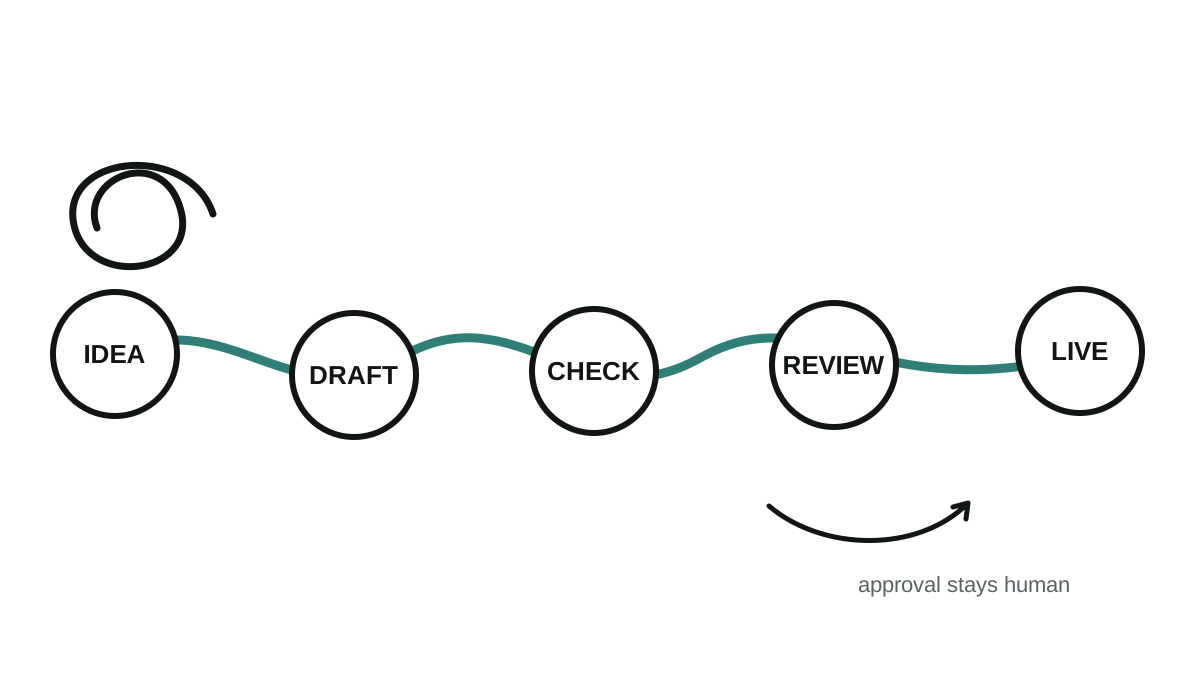
AI makes drafting faster. It does not remove the need for sources, review, or a publishing boundary.
For a LEGKO One site, a useful workflow looks like this:
1. Start with approved facts
Give the editing tool the real source material: a project note, product details, a photograph, an interview, or links to reliable references. Tell it what is known, what is uncertain, and what it must not invent.
2. Create a draft, not a live page
The article is written as a Markdown file with validated fields for its title, description, date, author, tags, image, and image alternative. New work begins as a draft on a separate branch.
That separation matters. “Write an article” and “publish this article” are different instructions.
3. Run the ordinary checks
The site build should confirm that the content matches its schema. Links, metadata, heading structure, image paths, and the requested scope should also be checked. A successful build proves that the project compiles; it does not prove that every statement is true.
4. Review the words and the rendered page
Read the diff to see exactly which files changed. Open the preview to check the title, line lengths, image treatment, links, and mobile layout. Verify factual claims against the source material.
5. Approve and publish
Only the reviewed version is merged into the production branch. The site rebuilds and deploys, while Git keeps the earlier state available.
The result is intentionally unmagical:
Source → draft → checks → preview → approval → publish.
AI speeds up the middle of the process. Clear ownership and review keep it useful.