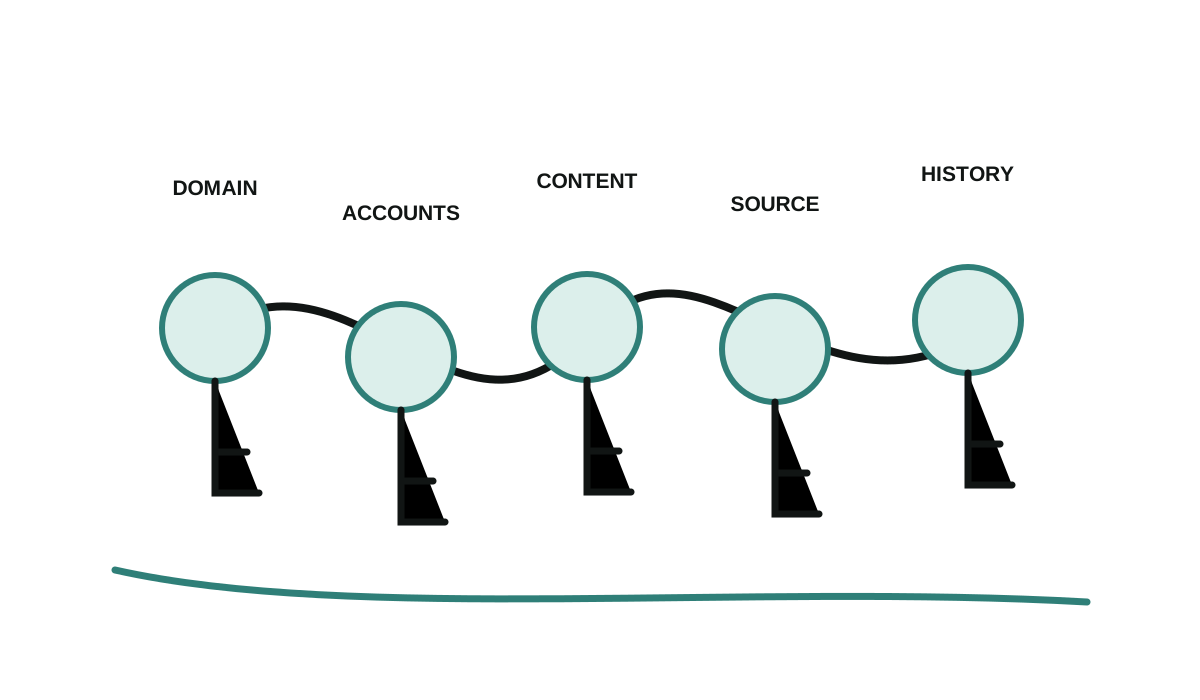
Owning a website means more than having permission to edit a paragraph.
Before a project begins, the proposal should say who owns or controls each important part and what happens at handoff.
Domain
The business should control the domain registration and know which account renews it. The recovery email and payment method should not belong only to a former agency or employee.
Hosting and service accounts
Cloudflare, email, analytics, form delivery, and other agreed production services should have documented ownership and access. Secrets stay in provider configuration, but the client needs a practical recovery path.
Content and media
The business copy, articles, approved images, and data should be available in usable files. Confirm that supplied or licensed media can legally be used and transferred as expected.
Source code and configuration
For a Legko site, the repository contains the Astro project, structured content, components, and configuration. Git history records how the current version was reached. A README should explain how to install, build, and preview it without relying on one person’s memory.
Exit process
A handoff should identify recurring services, renewal dates, known limitations, and any work that remains. Another developer should be able to inspect the public site and the repository without reverse-engineering a proprietary page-builder database.
Ownership does not mean every third-party tool is free or that any developer will know the stack immediately. It means the client is not prevented from inspecting, continuing, or replacing the system.