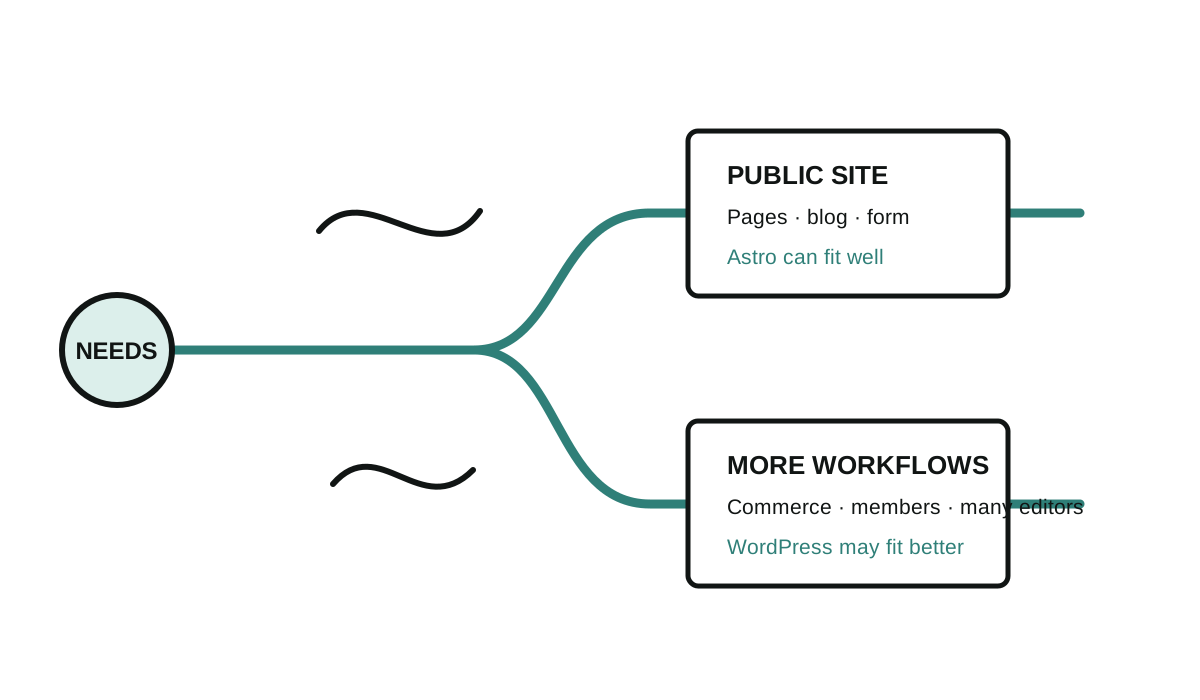
Astro is a good fit for many public business sites. That does not make WordPress a mistake.
WordPress may be the better choice when the organization needs its ecosystem more than it needs a smaller static stack.
Complex commerce
If WooCommerce and its extensions already support products, taxes, shipping, inventory, payments, and staff workflows, replacing that system requires a business case, not a preference for cleaner code.
Memberships and user accounts
Sites with gated content, customer profiles, subscriptions, or many logged-in workflows need durable application logic and data. A mostly static site can connect to those systems, but it should not pretend they disappear.
A large traditional editorial team
If many nontechnical editors need roles, media management, scheduled publishing, revisions, and an established browser-based workflow, the WordPress dashboard may be more familiar and more appropriate than a branch-and-preview process.
Plugin-dependent integrations
An existing plugin may already solve a specific booking, directory, learning, donation, or industry requirement. Rebuilding it as custom software can cost more and create more risk than maintaining the proven setup.
Easy access to specialists
The WordPress developer market is much larger than the Astro developer market. That can matter when the organization expects frequent custom development from different vendors.
For a service business that mainly needs public pages, a blog, a contact form, and occasional changes, Astro can reduce routine machinery. For a site whose value lives in WordPress-specific workflows, keeping WordPress may be the simpler decision.
The right question is not “Which framework wins?” It is “Which operating model matches this website?”